






- Your cart is empty Browse Shop
Beginners guide to start your photography journey
Introduction:
Photography is an art and a skill that can be learned by anyone, whether you’re a budding photographer aiming to capture portraits, events, or just wanting to document your own creative vision. In this guide, we’ll walk you through the essentials to help you start your photography journey with confidence, and provide tips on how to create professional-level work from the very beginning.
1. Understand the Basics of Photography
Before you even pick up your camera, it’s important to understand the key concepts of photography. These include:
Exposure: The amount of light that reaches the camera’s sensor. Proper exposure ensures your photos are neither too dark nor too bright.
Key components: Shutter speed, aperture, and ISO.
Composition: How you arrange the elements in your shot. Learn about the rule of thirds, leading lines, framing, and other compositional techniques that create visually appealing images.
Focus: How to focus your camera to ensure your subject is sharp and clear. Getting familiar with autofocus settings and manual focus will help you control your shots.
2. Choosing the Right Camera and Gear
Starting your photography journey doesn’t require expensive gear, but having the right equipment will help you succeed. Here’s what you need to know:
DSLR vs. Mirrorless Cameras: These are the most common types of professional cameras, but mirrorless cameras tend to be more compact and lightweight.
Lenses: A versatile zoom lens (like a 24-70mm) is a great starting point. As you progress, you can experiment with prime lenses or wide-angle lenses for different effects.
Tripod and Stabilization Tools: A tripod is essential for shooting in low light and for long exposures.
3. Master Your Camera Settings
Get familiar with the key settings on your camera:
Manual Mode: Learn how to control your camera manually so that you can adjust the exposure triangle (shutter speed, aperture, and ISO) for the best results.
Auto vs. Manual Focus: While autofocus is helpful, manual focus gives you greater precision, especially in controlled environments like portraits.
White Balance: Adjusting the white balance ensures your photos have accurate color tones, especially under different lighting conditions.
4. Practice Different Types of Photography
The beauty of photography is that there are many genres to explore. As a beginner, try experimenting with different types of photography to find what excites you:
Portrait Photography: Perfect for models, actors, and media personalities. It’s all about capturing the subject’s personality through lighting, composition, and expressions.
Landscape Photography: If you’re into nature, landscapes, and architecture, landscape photography can be incredibly rewarding.
Product Photography: If you’re looking to shoot for businesses or media purposes, product photography is an excellent skill to develop.
5. Lighting: The Key to Professional Photos
Lighting can make or break your photos. The right light can bring out the subject’s best features, while poor lighting can create unflattering shadows.
Natural Light: Always a great option for beginners, natural light can create soft and flattering looks for portrait and fashion photography.
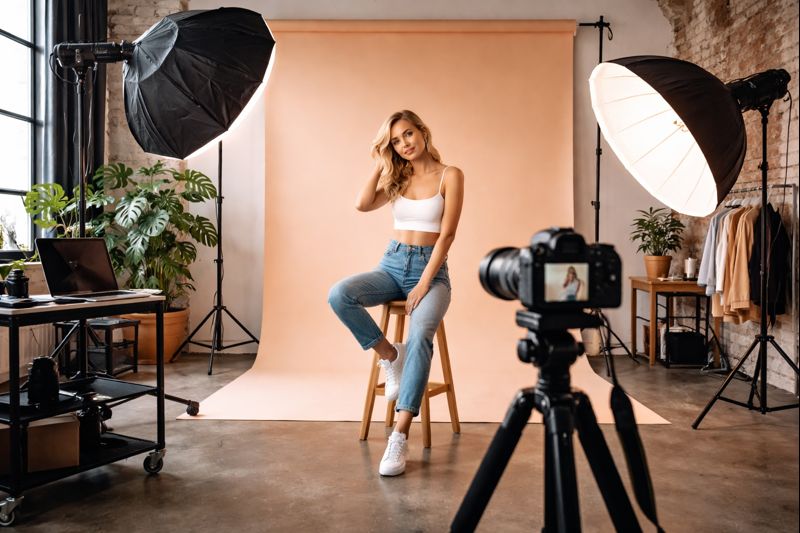
Artificial Light: Learn how to use studio lights, flashes, and reflectors to control light when shooting indoors or in controlled settings.
6. Post-Processing: Editing Your Photos
Post-processing is where the magic happens. After you’ve taken your photos, editing them can help you enhance colors, adjust brightness, and remove distractions. Some popular tools for beginners include:
Adobe Lightroom: Great for adjusting exposure, white balance, and color tones.
Adobe Photoshop: Perfect for advanced editing like retouching and manipulating images.
Free Editing Software: If you’re on a budget, try free programs like GIMP or Snapseed.
7. Keep Learning and Practicing
Photography is a continuous learning process. There are endless resources to help you grow as a photographer:
Online Courses and Tutorials: Platforms like Skillshare, YouTube, and even Instagram offer tons of free and paid tutorials to learn new techniques.
Join Photography Communities: Joining groups on Facebook or Reddit, or engaging with local photography meetups, will provide support and feedback from other photographers.
Practice, Practice, Practice: The best way to improve is by taking photos consistently and experimenting with new techniques.
Conclusion:
Starting your photography journey may seem overwhelming at first, but with the right knowledge and practice, you’ll quickly improve. Whether you’re aiming to shoot portraits for models or capture events, the key is to keep experimenting and refining your skills. Ready to elevate your photography? Book a session today with salekclicks.com and start creating stunning images that capture your vision!